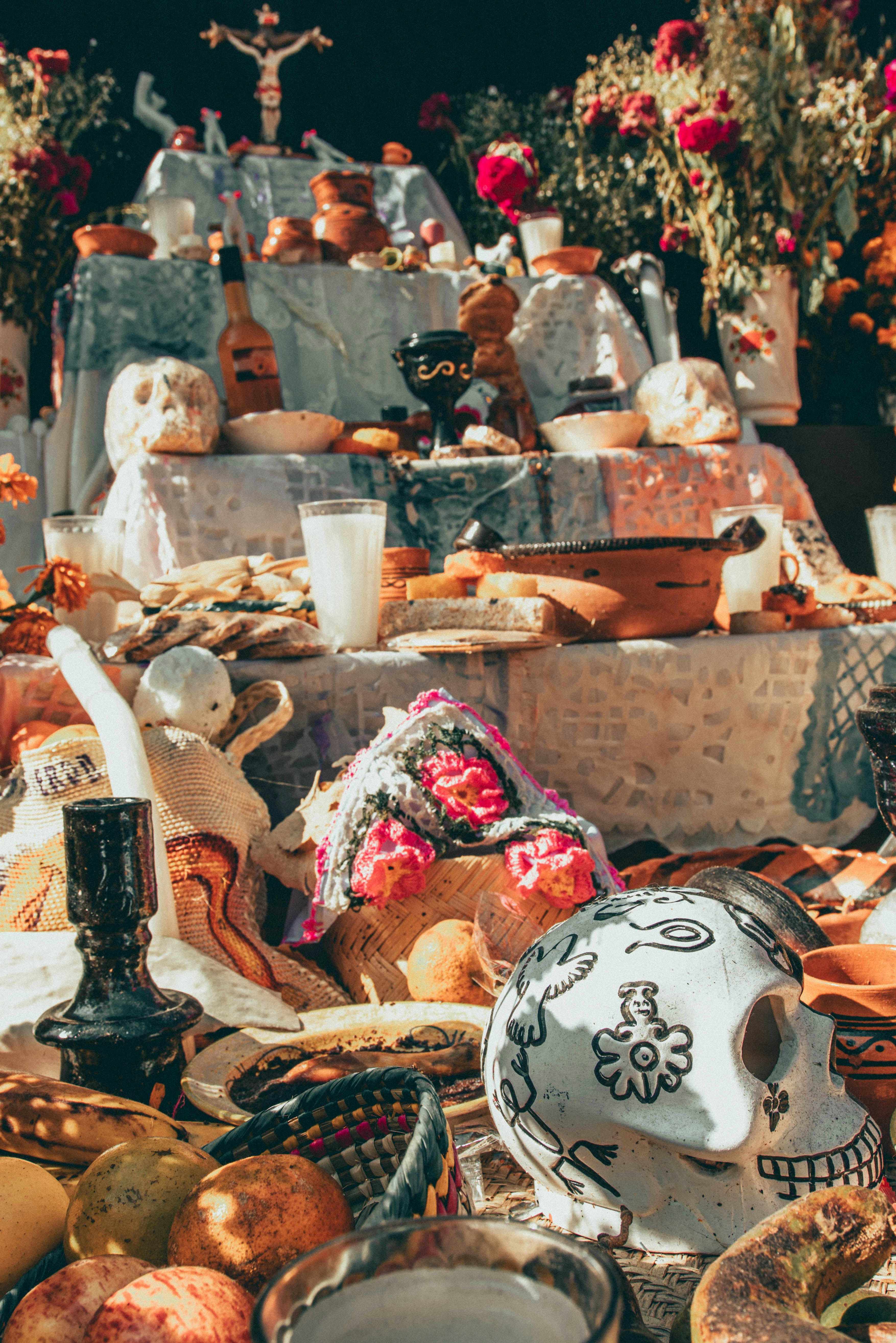
Mérida and Dia de muertos
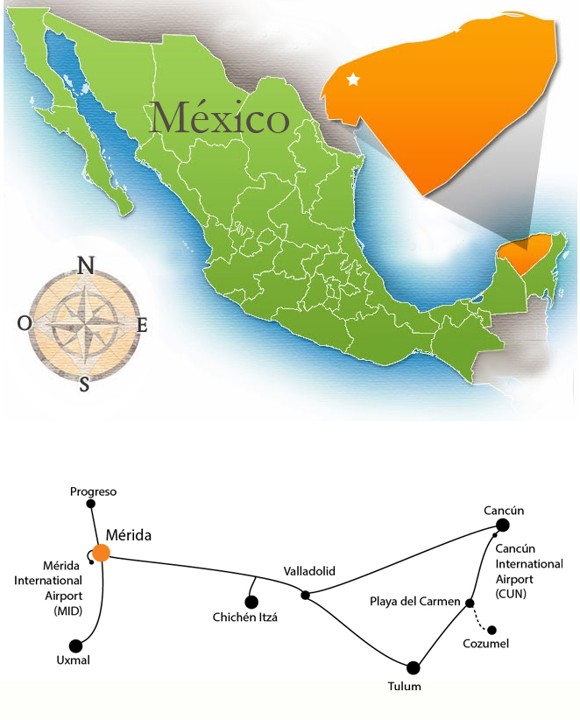
Mérida, Yucatán, Mexico
The city of Mérida, the capital of the Mexican state of Yucatán, has been twice appointed the Cultural Capital of the Americas, the first time in 2000 and then again in 2017, due to the large support given to educative and cultural activities. In the recent years, Mérida has hosted many of the most important meetings in science and culture, like the International Mathematical Olympiad in 2005, The International Physics Olympiad in 2009, and the Sixth Summit meeting of the Association of the Caribbean States in 2014, XV Latin American Congress of Probability and Mathematical Statistics (CLAPEM) in 2029.
The Yucatán peninsula covers a large portion of the southeastern section of México, including the states of Yucatán, Campeche and Quintana Roo. Along with the states of Tabasco and Chiapas, as well as some parts of the neighboring countries of Belize, Guatemala, El Salvador and Honduras, it housed the original lands of the ancient Mayan culture, one of the most important pre-Columbian civilizations and the direct ancestors of the present-day population.
Local Attractions/Excursions
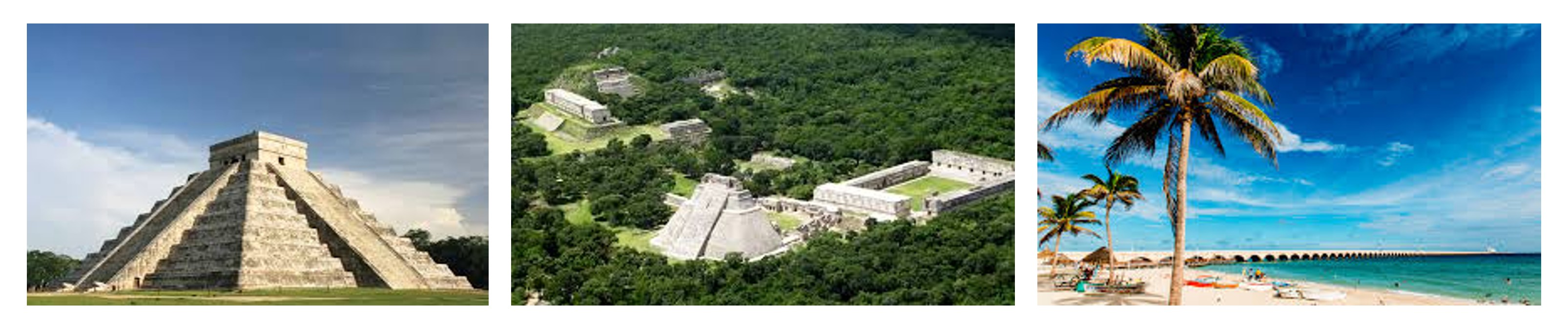
From left to right : Chichen Itza, Uxmal and Progresso.
Local Attractions/Excursions
Among the most important archeological sites, lie El Caracol, Joya de Cerén, Copán and Tikal, in the Central American portion of the Mayan region. Some of the most important sites are located in the states of southern México, like Palenque, Xel-Há, Calakmul, Edzná, Comalcalco, Yaxchilán, Tulúm. Within the State of Yucatán, are Chichén-Itzá, Ek-Balam, Uxmal, Kabáh, and Labná.
The peninsula is a singular place for a variety of reasons. The humid, warm weather promotes its special flora and fauna. The geology with characteristic calcareous soils and groundwater form a unique kind of natural wells, called cenotes, magical places of exceptional beauty. Along with the numerous archeological sites preserved from the Mayan ages, these constitute a must-see for any visitor. Another unique feature of the region is the exceptionally rich cultural heritage that resulted from the Mayan legacy mixed with influences of the colonial times. It is perceived in the language as well as in the famous cuisine of Yucatán, which stands out even in the greater universe of Mexican Cuisine, declared as an Intangible Cultural Heritage of Humanity by the UNESCO.
Mérida and the state of Yucatán are one of the most popular destinations for international travelers in México. Some of the main reasons have been previously stated.
Here are some useful resources to find out about Mérida and its surroundings:
https://www.lonelyplanet.com/mexico/yucatan-peninsula/merida
https://travelyucatan.com/mayan-ruins/
http://yucatantoday.com/
Dia de muertos
El Día de Muertos (The Day of the Dead) is one of Mexico’s most iconic and meaningful traditions, and the city of Mérida brings it to life through a unique fusion of Maya and colonial culture. In the Yucatán region, this ancestral celebration—locally known as Hanal Pixán, meaning “Food for the Souls” in the Maya language—takes place from October 31 to November 2.
Throughout these days, the city is filled with vibrant altars (altares), marigold flowers (cempasúchil), candles, traditional foods like mucbil pollo, and a spirit of remembrance. Families and communities come together to honor their departed loved ones, guided by both pre-Hispanic customs and Catholic symbolism.
One of the most emblematic events in Mérida is the Paseo de las Ánimas (Parade of the Souls), a nocturnal candlelit procession from the General Cemetery to the city center. Participants wear traditional garments and paint their faces to resemble skulls, offering a deeply spiritual and aesthetic experience to locals and visitors alike.
In addition to the main procession, parks and plazas across the city host concerts, workshops, and artistic performances dedicated to the theme of death as transformation rather than loss. Visitors can also explore temporary exhibitions showcasing contemporary interpretations of this ancient ritual. The atmosphere is both festive and reflective, turning the city into an open-air celebration of memory and life.
The conference takes place the following week, allowing international participants to experience this extraordinary cultural moment before engaging in scientific exchange. The logo of the conference was directly inspired by this celebration, symbolizing both remembrance and renewal—echoing the spirit of Día de Muertos and the pursuit of new ideas.
This unique cultural context makes Mérida an exceptional setting to reflect on both past legacies and future challenges.